
The complete guide
Choosing cordless screwdriver
Choosing a cordless screwdriver
A cordless screwdriver makes light jobs around the home quicker and easier on your hands. It runs on a rechargeable battery, so there is no cord to trip over. Here is what to look for, and where our model fits.
Why use a cordless screwdriver
With no cord, you can work up a ladder or reach into a cupboard without a cable pulling you back. Ours is sold as a portable tool, but the listing does not give its weight.
It also saves effort on repeat jobs like flat-pack furniture, door locks and cabinet hardware. You press a button instead of turning your wrist for every screw.
Most models are simple to use, even if you are new to DIY. Some add torque settings or a battery indicator, so check each listing for the features a model really has.
Types by job size
Standard models are compact and made for everyday light jobs, like hanging pictures.
Heavier-duty models are larger, with more torque and often several speeds, for bigger screws and harder materials.
Compact models are slimmer again. Some have an adjustable head for corners, drawers and cabinets.
How to choose the right one
Start with the jobs you have in mind. Think about the screw size and what you are fixing into, because big screws in hard timber need far more power.
If you plan to fit ceiling curtain track, make the fixing holes with a suitable drill first. Handy extras include a work light, a magnetic bit holder or a bit set, but confirm on the listing what is in the box.
Battery and charging
If you work for long stretches, compare battery capacity, full charge time and whether a spare battery is included.
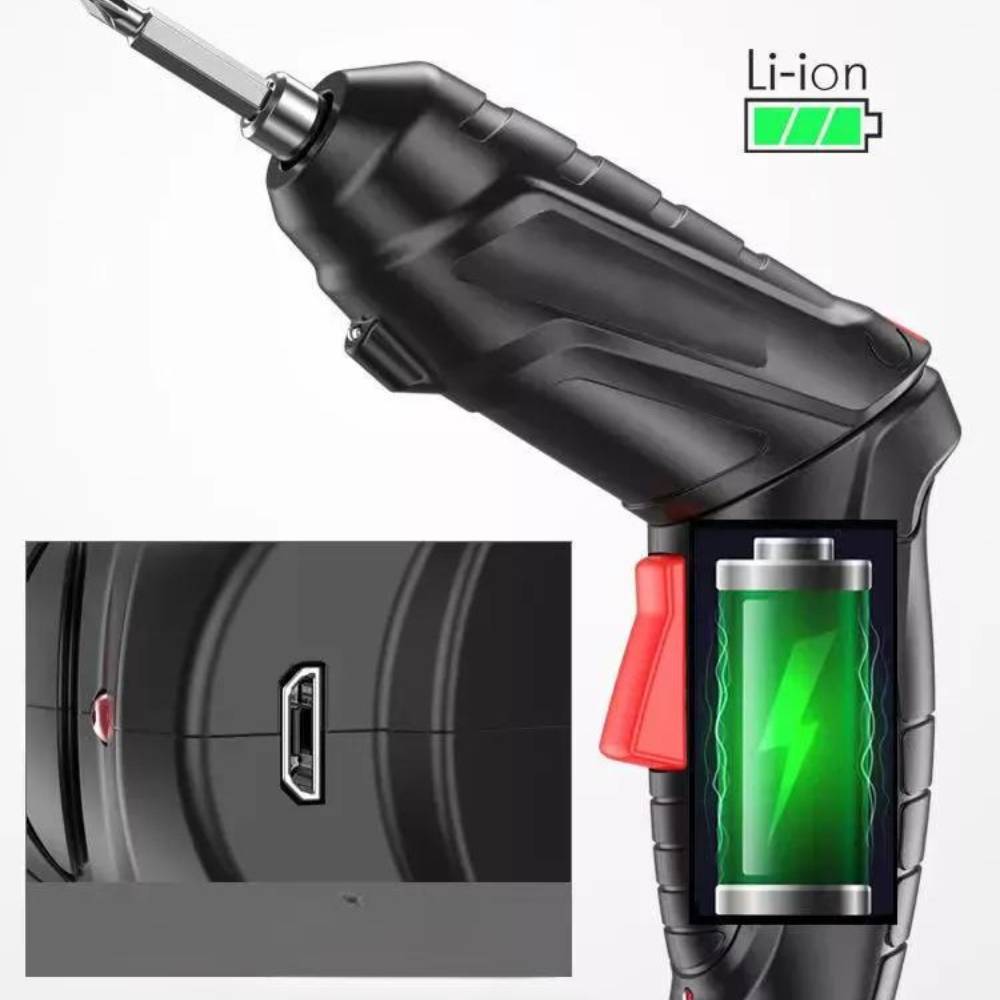
This screwdriver has a 1.3 Ah lithium-ion battery that charges by USB with the included charger. The listing does not state the charge time or run time, so ask us if either matters for your job.
What are cordless screwdrivers?
Cordless screwdrivers, also called electric screwdrivers, use a small motor to drive screws in and take them out. Most fit in one hand and run on rechargeable batteries, usually lithium-ion. Prices vary a lot depending on the type of tool.
Features and benefits
A big plus is reaching screws in awkward, tight spots. Owning one can also mean:
- Less effort: the motor does the turning, so your hands and wrists work less.
- Quicker work: a motor usually drives a screw faster than you can by hand.
- Fewer tools: with a set of swap-in bits, one driver can replace several manual screwdrivers.
Cordless screwdriver types
Straight, pistol and variable
- Straight: looks like a manual screwdriver, with the bit at the end.
- Pistol: shaped like a cordless drill but usually lighter and less powerful. It helps at tight angles.
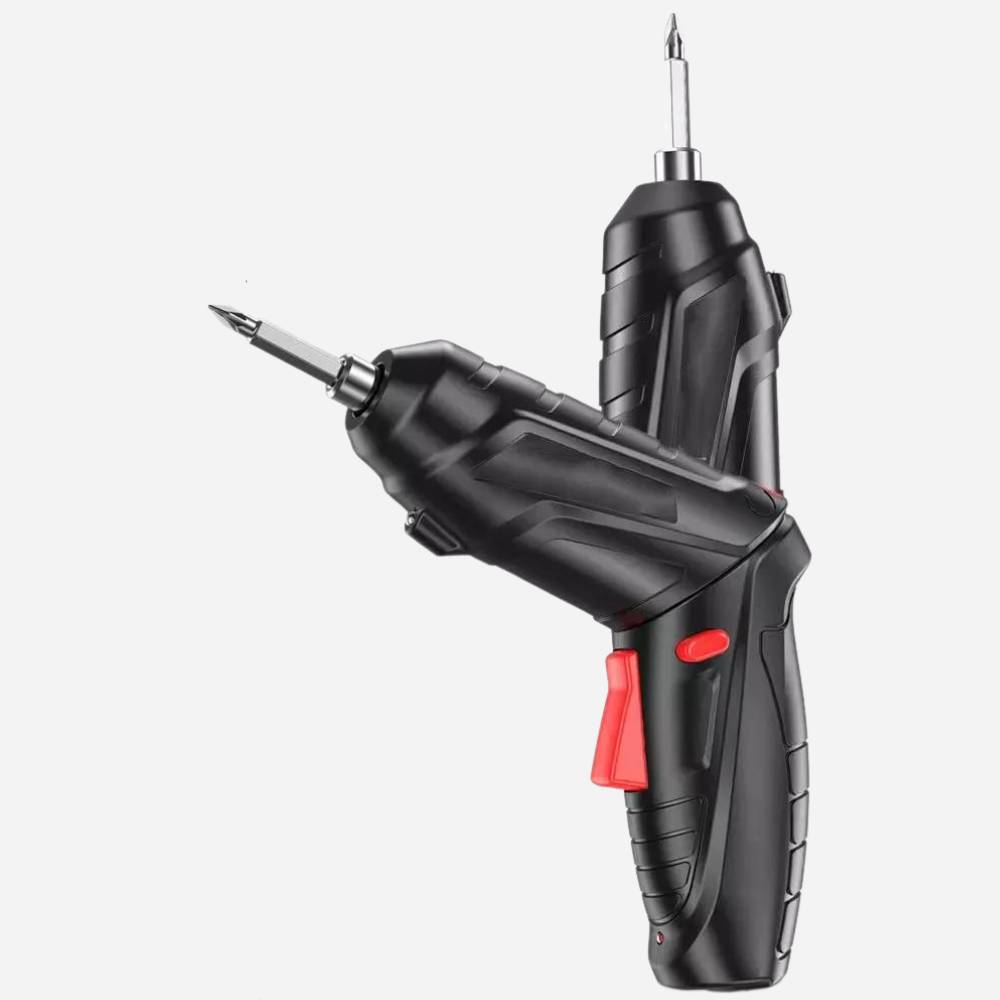
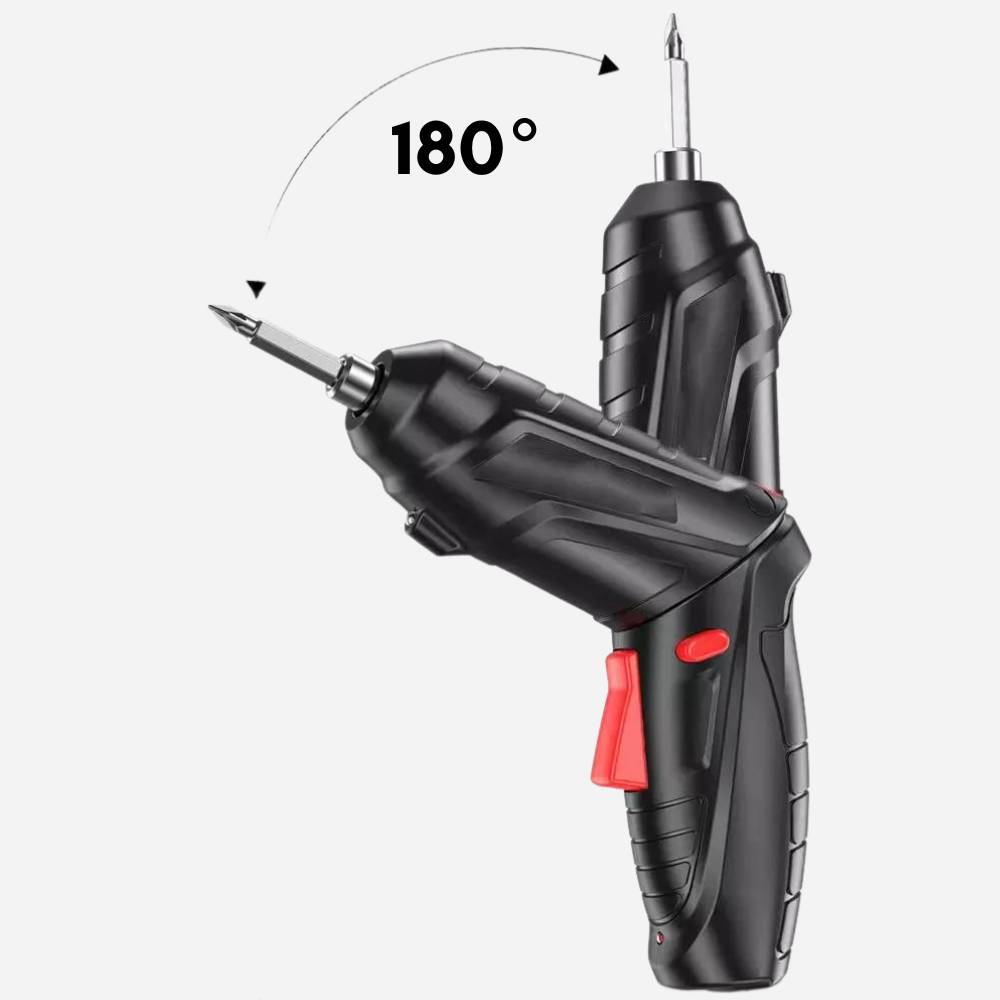
- Variable: holds straight or bends at a pivot into a pistol grip.
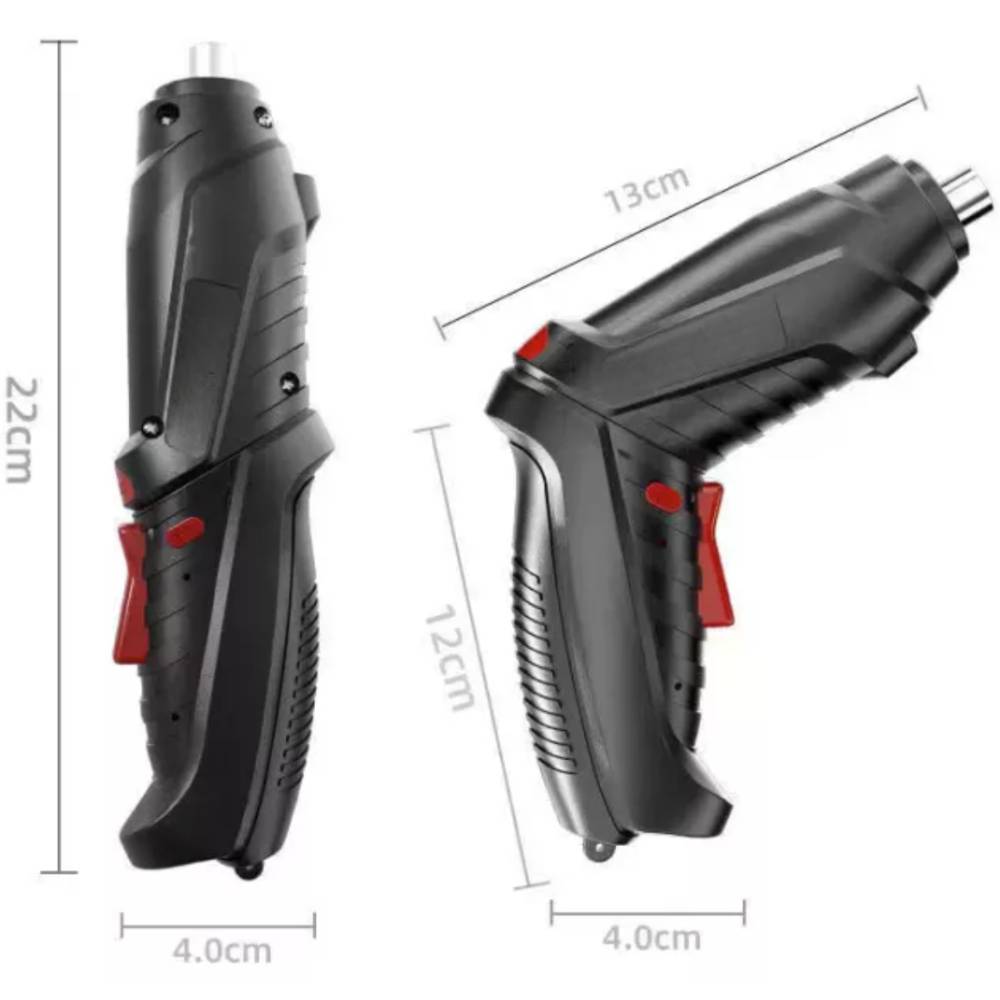
This screwdriver has an adjustable two-position handle, so you can use it straight or as a pistol grip.
Simple, impact and drill driver
- Simple electric screwdriver: suits light tasks and small spaces. Many have only 3.6 V or 4 V, so they are not made for tougher jobs.
- Impact driver: more powerful, for large screws or removing rusty or damaged ones.
- Drill driver: takes drill bits and screwdriver bits, so one tool can make holes and drive screws.
Key features to compare
- Speed: variable speed gives more control, and many models reverse to remove screws. This screwdriver runs at 200 RPM. The listing does not mention speed settings or a reverse function.
- Torque: this is the turning force. Bigger screws need more, and torque control helps set screw heads flush. This model gives 3.0 to 3.5 N.m.
- Spindle lock: some tools lock so you can turn them by hand.
- Handle: a rubber or soft grip gives a better hold.
- Cost: higher voltage usually costs more. A low-voltage tool is cheaper up front but may struggle with heavier jobs later.
- Extras: some come with a carry case or bits. This one has an LED light for dark spots. The listing does not say which bits, if any, are included.
What voltage do you need?
Cordless screwdrivers generally range from about 3 to 10.8 volts. More voltage usually means more power, weight and cost, but a big tool can feel clumsy on small jobs. The voltage is often printed on the battery or the tool.
Light jobs: small screws into softwood like pine, plastic or plasterboard. Around 4 V or less is usually enough.
Heavier jobs: drilling small holes, or driving screws into hardwood such as oak. Look for 7 V or more.
With a 3.6 V motor, this screwdriver sits in the light-jobs group.
Can you use a cordless screwdriver as a drill?
The tools overlap, but they suit different work. Screwdrivers are compact, light, easy to control and usually cheaper. You can drive screws slowly without stripping them.
Drills have more speed and torque and are made for drilling holes in many materials. They are also heavier, bulkier, harder to control and usually dearer.
When to use a cordless screwdriver
Reach for a screwdriver on small jobs around the house:
- taking off a cabinet door
- hanging a picture frame
- putting flat-pack furniture together
- craft projects and minor repairs
When to use a cordless drill
Use a drill for drilling holes, cutting with a hole saw or hanging plasterboard. Our screwdriver is for light household screwdriving, not masonry or heavy-duty work.
Common screwdriver bits
Every screw needs the right bit. Common ones include:
- Phillips: a cross-shaped tip.
- Phillips tamper-resistant: the Phillips shape with a hole in the tip, for screws with a centre pin.
- Pozidriv: like Phillips, with extra ribs between the arms for better grip.
- Torx: also called a star bit, with a six-point star shape.
- Torx Plus: a Torx version shaped to take more torque.
- Robertson: a square tip.
- Tri-wing: three blades for screws with three slots.
- Spanner: two round pins that fit the two holes in a spanner screw head.
- Hex: the six-sided shape of an Allen key, made to fit a driver.
- Nutsetter: a hex socket that fits over a nut or hex-head screw.
- Drywall: a Phillips bit with a ring near the tip that helps stop the screw going in too deep.
Your next step
This cordless screwdriver is $59.40 including GST. The listing does not state a warranty period. To check it suits your job, contact us.
We dispatch within 2 working days. Delivery then takes up to 7 working days by tracked courier. Delivery is free across Australia on orders of $99 or more, and $27.50 including GST below that.